Monday, July 03, 2006

No Breathalyzer, No Plea Deal

In a pointed reference to a plea deal Marion Co. Prosecutor Carl Brizzi's office reached with Nancy Irsay, his Democratic opponent Melina Kennedy appeared at a joint press conference with the former head of MADD, Daniel Hodgkins, to support a proposal which would bar plea deals for suspects who refuse to take a breathalzyer test. Under current Indiana law, a driver who is suspected of driving while under the influence and who refuses to take a breathalyzer test automatically has his/her driver's license suspended for one year. The Star's Richard Walton writes:

While Indiana law requires motorists suspected of driving while intoxicated to take the breath test or face a 1-year suspension of their driver’s license, Hodgkins said some high-profile cases where deals were cut on criminal drunken driving charges have raised doubts about the requirement.

Hodgkins appeared at a news conference Monday in which Melina Kennedy, Democratic candidate for Marion County prosecutor, made the proposal regarding plea deals.

“I’m concerned about people saying that they don’t need to take a Breathalyzer, and that it might actually help their (criminal) case,” she said.

Earlier this year, Brizzi's office allowed Nancy Irsay to cop a plea for reckless driving, even though she was pulled over by police after she sped her car through an intersection at more than 70 mph in a 30-mph zone, causing her car to go airborne. Irsay refused to take a breathalyzer when asked to do so by police.

South Bend Voices Behind Battle For Gay Civil Rights

The South Bend Tribune's Jamie Loo takes a look today at several of the voices behind the push in South Bend to enact a gay civil rights ordinance. She talks to real folks who've faced discrimination in South Bend because of their sexual orientation and who believe passage of the proposed law will make a difference in their lives. The stories are based on a study conducted by South Bend Equality.

TDW Is Talk Of Our Town

Congrats to newly-weds Jen Wagner (of Taking Down Words fame) and Gordon Hendry who were wed on Friday as noted by the Star's "Talk Of Our Town." Susan Guyett writes:

The Petersons, Bart and Amy were guests at the wedding reception for Gordon Hendry and Jennifer Wagner.

Hendry is Indy Partnership interim chief executive and before that served on Indianapolis' mayor's staff. Wagner, a former Indianapolis Star reporter, now works for the Indiana Democratic Party and attends law school. She drives the Indiana GOP wild penning a very partisan blog called "Taking Down Words."

The pair married Friday in Bloomington and celebrated with friends and family Saturday at a reception held at the Indiana State Museum. The Hendrys are Scots, so the groom and a number of other guests, including his twin brother, wore kilts.

Unfortunately, the online edition of the Star doesn't have the wedding photo of Jen and Gordon, which does appear in today's newspaper; otherwise, we'd post it. Yes, Gordon really did wear a kilt to his wedding.

Sunday, July 02, 2006

Tale of Two Romneys


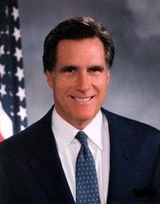
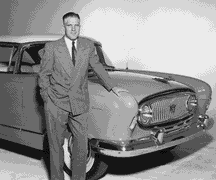
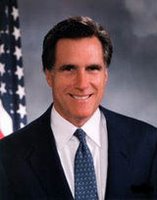
The late former Michigan Governor George Romney (R) and his son, Massachusetts Governor Mitt Romney (R), share much in common. Devout Mormons, the two racked up successful careers in business before launching their political careers as governors of their respective states. And both became leading aspirants in the Republican Party for president. But there is one defining difference between father and son which points to a major problem in the Republican Party today--respecting the importance of supporting civil rights for all Americans.

Before entering politics, George Romney worked his way up through the business world to become Chairman of the American Motors Corp., a company he was largely credited with saving from the brink of bankruptcy by marketing the Rambler compact model, which became one of the hottest selling cars in America during its time. He left AMC to run for governor of Michigan, an office he won election to three times. Though he once served as a missionary and bishop for the Mormon Church, a church that many consider to be exclusive, he championed civil rights laws as governor in the 1960s. A people's governor, he became known for making time each week when Michigan residents could stop by his office and tell him about their concerns for five minutes each.

His popularity and success as a governor made him an early favorite to win the GOP presidential nomination in 1968. His campaign got tripped up, however, when he used a poor choice of words to explain his shift from support to opposition to the Vietnam War. He complained that he had been "brainwashed" by the U.S. military when he toured Southeast Asia a fews years earlier. Then-former Vice President Richard Nixon would jump on the statement as a sign of weakness and effectively put Romney out of contention, leading him to drop his bid before the first presidential primary. His son, Mitt, missed out on his presidential race altogether, opting instead to do work in France for the Mormon Church.

George later served as Nixon's HUD Secretary but left federal service after Nixon's first term, complaining that the administration's "support for urban programs had been less than what he had hoped for." When he left public service, he founded the National Volunteer Center, which promotes volunteerism. The organization later merged with the Points of Light Foundation supported by President George H.W. Bush.

Mitt Romney, like his father, enjoyed a very successsful business career. After serving as a senior executive of a leading management consulting firm, he started his own venture capital firm, which grew into one of the nation's most successful venture capital and investment companies. Staples, Domino's Pizza, Sealy and Brookstone are among the company's success stories. Mitt first gained national notoriety when he took over the troubled 2002 Salt Lake City Winter Olympics in 2002. He earned great respect for his management and ability to mobilize volunteers to make it one of the most successful U.S. Olympic events.

Mitt launched his first bid for office against Sen. Edward Kennedy. Kennedy handily defeated him, but he came closer than any Republican challenger had before. In 2002, Mitt ran as a long-shot candidate for governor of Massachusetts. He won in an upset election most pundits had expected to go to the Democrats. As Governor of a state with a Democratic-controlled legislature, Mitt has proven to be adept at crossing party lines to get his legislative programs acccomplished. He did this earlier this year to make Massachusetts the first state in the country to tackle the problem of the uninsured in a comprehensive fashion to make health insurance available nearly to all Massachusetts residents.

It was after he assumed office as Governor that the Massachusetts Supreme Court ruled in favor of same-sex marriages. Romney was highly critical of the decision and did everything he could to block its implementation. He charged that the decision actually harmed the rights of children:

They viewed marriage as an institution principally designed for adults. Adults are who they saw. Adults stood before them in the courtroom. And so they thought of adult rights, equal rights for adults ... Marriage is also for children. In fact, marriage is principally for the nurturing and development of children. The children of America have the right to have a father and a mother.


Romney supported unsuccessful efforts to add a ban on gay marriages to the state's constitution. Although he initially suported a compromise initiative to allow the state's voters to choose between same-sex marriages or civil unions, he later withdrew his support for it, saying he opposed civil unions as well. He was successful, however, at resurrecting a nearly century-old law which prohibits non-residents from marrying in Massachusetts if the marriage would be void in their home state. In explaining his hard-line position on same-sex marriages, he speaks of his concern for it undermining religious institutions:

Among the structures that would be affected would be religious and certain charitable institutions. Those with scriptural or other immutable founding principles will be castigated. Ultimately, some may founder. We need more from these institutions, not less, and particularly so to support and strengthen those in greatest need."

Because he is a Mormon, many traditional evangelical conservatives, who consider Mormons not to be true Christians, have been expected to oppose his nomination. Perhaps it was because of this bigotry towards Mormons by other Christian faiths that led his father George to fight so hard to advance civil rights for all Americans. Mitt is not detoured by any hangups the Christian right may have against him because of his Mormon faith. He has been shamelessly reaching out to these folks, having recently appeared on Pat Robertson's 700 Club. When compared to the divorced John McCain, Romney's "family man" credentials are pretty impeccable. In the end, the Christian right will likely fall into line behind Romney for no other reason than no other candidate can articulate their "moralistic" message more effectively than him, Mormon or not.

So what's the point of it all? Mitt Romney is the guy to beat. John McCain simply doesn't have what it takes to get the GOP nomination despite his early favorite status. Mitt Romney is the only one with the whole package to pull together a large enough bloc of conservative voters in the GOP primaries to win the nomination. The unfortunate aspect of Mitt's likely success in the 2008 GOP presidential race is that he must embrace the very bigotry that his own father despised to even have a serious chance at winning the nomination. Even worse is that he appears so comfortable doing it. Then again, that says everything about how much the Republican Party his father knew has changed over the past three decades.

Who Drives The Most Expensive Car In State Government?

If you thought the governor got the most expensive car in state government, you would be wrong. FSSA Secretary Mitch Roob gets that honor. He's driving a Toyota Sequoia, which cost the state $36,000. That's $8,000 more than the $28,000 GMC Envoy Gov. Daniels is furnished.

According to the Star's "Behind Closed Doors", other state employees drive less expensive cars, such as the Ford Taurus, a Dodge caravan minivan or the Jeep Cherokee. Roob tells the Star that "the Sequoia provided the necessary support to his back that the standard state fleet vehicle just didn't provide." The Star adds, "We probably should be glad that the only car that made Roob's back feel better wasn't a Porsche or a Lamborghini." Do you think the 10,000 Medicaid recipients who lost their benefits because of his agency's mistake earlier this year will be comforted knowing that he's comfortable in his Toyota Sequoia?

State Lottery Director Esther Schneider says she was offered a car but turned it down. Speaking of whom, the column also tells us that Gov. Daniels says Schneider's job is safe for now. "Asked whether he still has confidence in Schneider, Daniels said: 'Till somebody shows me to the contrary.'" Daniels added, "[W]hat we do know is the lottery was a wreck when she got there. There were people with unpaid taxes, people with suspended driver's licenses, people who had stolen lottery tickets." And, he added, "we know that the place was featherbedded. She took out 10 to 20 percent of the personnel." Does this mean the controversial inspector general's complaint warrants no more than an item in "Behind Closed Doors?"

Saturday, July 01, 2006

So Where Is The $3.8 Billion?

Last Thursday the Indiana Finance Authority (IFA) accepted wire transfers totalling $3.8 billion as an upfront payment from the privator consortium that is leasing the Indiana Toll Road. So where is that $3.8 billion sitting right now. The South Bend Tribune's Martin DeAgostino answers that question today.

The money IFA received was deposited in an account at the Indianapolis branch of JP Morgan Chase/Bank One, an out-of-state bank. It is already earning $518,000 a day in interest. D'Agostino reports that IFA will transfer the money to State Treasurer Tim Berry on Wednesday. IFA will, however, deduct from the amount bills that it has already incurred. That includes $198 million to retire Toll Road bonds and $24 million in broker and legal fees. So IFA will actually be transferring about $3.6 billion to Berry.

Berry is still awaiting responses from a solicitation to manage the funds, but he will immediately invest the money. Berry says he will use short-term instruments available to the state, including bank certificates of deposit and U.S. Treasury notes and other federally backed securities. How much will the banks earn in fees from managing the state's money? Berry's solicitation does not specify fees, but DeAgostino's story predicts the fees will range from .25 percent to 1.5 percent. Berry told DeAgostino that "the final mix will involve instruments of longer maturity than is typical with state investments, and a greater variety of instruments."

Feds Put Brakes On FSSA Privatization Plan

If FSSA Secretary Mitch Roob had gotten his way, a private contractor would have assumed control of determining elibigility and benefits for several welfare-related services as of today. That process was slowed down first by the administration and now by the federal government. The AP's Ken Kuzmer reports that Indiana risked the loss of federal funding if it did not obtain approval from the appropriate federal agencies before turning over the keys to a private contractor. The agency now expects the process to be delayed by four months.

In an earlier post today, we noted that FSSA has just acknowledged that it improperly took away Medicaid benefits from 10,000 Hoosiers during the first five months of the year. The agency agreed to restore benefits and follow appropriate review procedures which are required before terminating a recipient's benefits as part of a federal class action lawsuit brought against the agency.

State Parties Adopt Platforms And Hide Them From Public View

Last month, both the Indiana Republican and Democrat parties held their state conventions at which they adopted their respective party's official platform on which their candidates will seek election this year. AI observed at the time the complete lack of MSM coverage of any of the substance of the party platforms in their coverage of the state party conventions. Today, Fort Wayne Observed picked up on an observation by Indiana Politico, that neither party had posted a copy of its official platform on their respective websites.

Mitch Harper, the editor of Fort Wayne Observed, is a former GOP legislator. He attended the GOP convention and happily obliged Indiana Politco by posting a copy of the Republican Party Platform on his site, which you can access by clicking here. AI posted an item at the conclusion of the GOP convention, which talked about how one gay GOP delegate felt alienated at the convention by a party that had become the captive of the extreme Christian right. The content of the platform backs up those observations.

The GOP's platform asserts that it believes "our strength is in our diversity." But a statement in support of equal opportunity to ensure "full participation of all of our citizens in government" shuns the inclusion of sexual orientation or gender identity among the classes we should protect from discrimination. The party has obviously forgotten that it was the GOP which first fought to end discrimination on the basis of both race and gender.

On religious freedom, the party's platform tells that "the First Amendment guarantees freedom of religion, not freedom from religion." It adds, "We do not support court ordered mandates that remove prayer from the public forum." This latter sentence is in reference to Judge David Hamilton's federal court order against House Speaker Brian Bosma, which in fact does not remove prayer from the public forum; rather, it instructs the Speaker to recognize that the Establishment Clause of the U.S. Constitution requires that the House refrain from allowing sectarian prayers, which are excluding to members of non-Christian faiths, as official prayers for the House of Representatives.

On the issue of marriage, the platform reads, "We support the millenia old concept of marriage as a union between a woman and a man, and we agree with the Republican leaders in the Indiana Senate and the Indiana House of Representatives that any proposal to change that concept should be decided by the people, and not by the courts." This statement is code for saying the party supports a constitutional amendment which will write discrimination into Indiana's Constitution against same-sex couples.

The party's statement on abortion, by comparison, takes a more middle-ground approach. It says, "While recognizing the diversity of opinion among members of our party, we support current Indiana law that says, Childbirth is preferred, encouraged and supported over abortion." Many abortion rights supporters wouldn't disagree with that statement. It also does not provide for any radical over-turning of the landmark Roe v. Wade case, or a defiant stance against that court ruling by passing a state law outlawing abortion, such as South Dakota and Louisiana have done this year, which has been urged by several conservative GOP legislators.

Like Indiana Politico and Fort Wayne Observed, AI is curious to learn what is in the Democrat's platform. AI would like to share it with our readers as well if anyone has a copy of it to share.

UPDATE: John Good, a Fort Wayne blogger, met a challenge from Mitch Harper, and posted a copy of the Democrat platform. You can read it by clicking here. In sharp contrast with the GOP platform, it has a very inclusive equal opportunity policy and supports hate crimes legislation. It reads:

As the party of the people, Indiana Democratas strongly oppose the restriction of opportunities to Hoosiers based on their gender, ethnicity, age, disability, religion, race, sexual orientation, gender identity or economic background. We also encourage legislation addressing hate crimes and subsequent statewide education that would protect the freedom of all Hoosiers and create tougher penalties for those who infringe, criminally or otherwise, on those freedoms.


A few of the pages are currently inaccessible, but of those pages I was able to view, nothing in the platform addressed the issue of same-sex marriage.

Roob Blunder Rains On Daniels' Parade

In what was otherwise turning out to be the best week of Gov. Mitch Daniels' administration, a major blunder by FSSA Secretary Mitch Roob has washed out his week of good news. As a result of a federal class action lawsuit, the agency has admitted it erred in cutting off benefits to 10,000 Medicaid recipients beginning in January of this year. The Star's Tim Evans explains:

The reversal is the result of a federal class-action lawsuit filed last month by six Medicaid recipients who lost benefits -- some without notice or explanation -- because the agency ruled their incomes were too high to qualify for assistance with medical bills.

An agreement reached this week calls for the FSSA to reinstate benefits to the people who have lost services since Jan. 1 and to stop removing other Medicaid recipients from the "spend down" program without a hearing.

The timing of today's news is particularly problemmatic for the administration's controversial effort to privatize intake and eligiblity reviews for FSSA's welfare-related programs. It has been estimated the winning company will be paid at least a billion dollars over the 10-year term of the agreement. The effort came under heavy fire after it was revealed that one of the two major companies vying to win the bid, ACS, is Roob's former employer immediately prior to joining the administration.

So how did so many people get their benefits cut? The agency's spokesman, Dennis Roseborough, told Evans "he could not make any broad statements explaining why individuals lost benefits because so many variables go into individual cases." The man who brought suit thinks he knows what happened. Evans writes:

In some cases where Medicaid assistance was terminated by the state, Severns said it was because of "gross miscalculations" of medical bills. He said benefits were cut off to others even though they filed appeals -- a process that, under federal law, requires the assistance to continue until a determination hearing is conducted.

The problems occurred after the FSSA automated much of the spend-down program in response to a 2003 lawsuit. The new process went online Jan. 1.

Severns said some other problems may be the result of huge caseloads assigned to FSSA workers. Depositions taken in the suit revealed some workers were managing more than 600 cases. He said there also was little or no quality control by supervisors, who should have been reviewing the decisions to cut off benefits.

The problems occurred after the FSSA automated much of the spend-down program in response to a 2003 lawsuit. The new process went online Jan. 1.

The key point here is that an automation system went into effect on January 1. Computer systems can do wonders for helping you get the job done, but they sometimes remove people too much from the process, leading to gigantuan blunders such as occurred here. Severns told Evans that the number of people being removed from the Medicaid program from January to May was six times the normal rate. That should have raised a red flag with someone in the agency that something was amiss, but it apparently took a lawsuit to get Roob's attention.

A mistake of this magnitude has to be laid at the doorstep of the agency's boss, Robb and his senior level managers. This will also likely come into play when the final budget numbers become available. If the state claims to have ended the year with a balanced budget, people will begin asking how much savings in the budget was attributable to recipients being improperly cut off Medicaid benefits? Anyone taking bets on how much longer Roob will remain in his job?